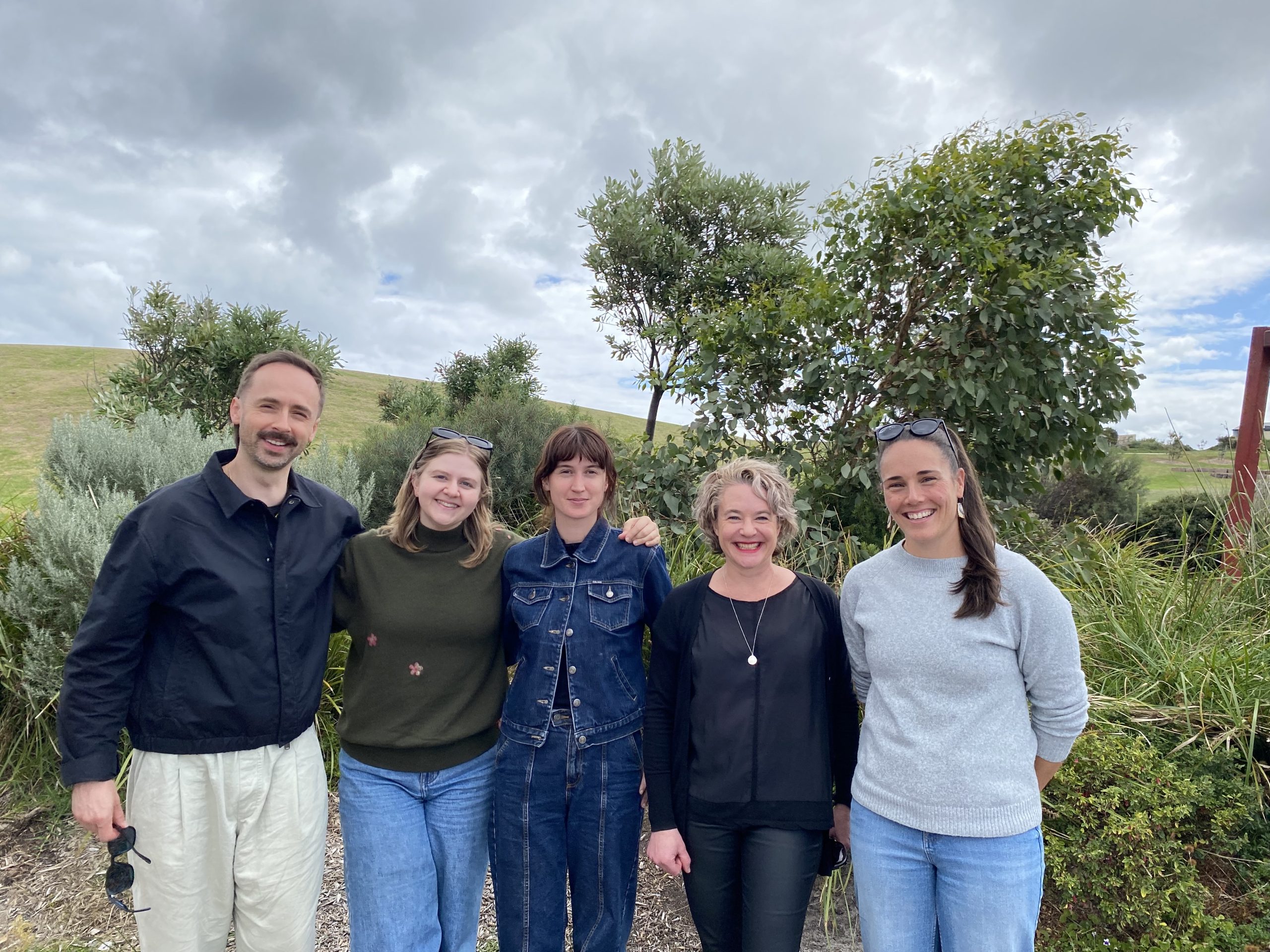
From 9-13 December 2024, multiple ICON team members attended and presented research at the Ecological Society of Australia (ESA) conference held at the Melbourne Convention and Exhibition Centre (MCEC). The ESA conference showcases the science of ecology in Australia and explores connections between science theory, research, policy and on-ground outcomes (ESA 2024).

Most of the ICON presentations focused on designing, planning for, and supporting nature in urban spaces. On the first day, Prof Sarah Bekessy chaired the symposium on ‘Designing for Nature in Cities’ which included a range of exciting, interdisciplinary speakers exploring approaches to bring nature back into our cities. Within this session, Dr Cristina Hernandez Santin advocated for bridging the gap between science and practice when it comes to biodiversity inclusive design and identified some critical leverage points within design processes to do so.
Beth Kiss presented findings which revealed significant, yet often unintentional, human-wildlife interactions in homes which could inform decisions on incorporating wildlife-friendly features into buildings. Fiona Hoegh-Guldberg proposed a novel framework ‘Nature-Water design’ which integrates biodiversity and water sensitive urban design to promote an interdisciplinary exchange in urban planning and development, leading to better outcomes for biodiversity, water and people. And finally, Catalina Mardones spoke about the benefits of nature-connectedness and how this can inform public health strategies and urban design for more liveable cities.


In the ‘Nature in Cities’ symposium, Dr Jacinta Humphrey shared insights on the dominance of noisy miner birds in Melbourne and how this affects avian conservation. Key recommendations were to increase native vegetation cover and understorey complexity in residential areas. In the ‘Planning for Nature in Cities’ symposium, Dr Hugh Stanford’s talk showed how informal green spaces can contribute to urban species richness, while Dr Holly Kirk proposed a new approach that can be followed alongside traditional Environmental Impact Assessments (EIAs) that aims to enhance biodiversity rather than simply mitigating negative impacts.
In a symposium on ‘Spanners, connectors, catalysts, and levers for biodiversity: Tensions and opportunities for transformational systems change,’ Dr Lily Van Eeden presented work on a transdisciplinary Community of Practice (CoP) to incorporate behaviour change into conservation decision-making at the science-policy interface. Drawing on research with coffee retailers in Melbourne, Australia, Dale Wright uncovered behavioural insights for transforming coffee supply chains to deliver sustainable outcomes and reduce biodiversity loss.


There were a few sessions dedicated to working toward the ‘Nature Positive’ agenda. Dr Ascelin Gordon presented in one of these sessions to talk about offsetting native vegetation in New South Wales, Australia. Dr Gordon discussed the risks, uncertainties, and challenges for the scheme to achieve no net loss of biodiversity, and the important role that robust biodiversity offsetting should play in achieving nature-positive outcomes.
Overall, the ICON team had a wonderful time at ESA 2024 learning about the exciting new developments coming out of ecological science in Australia and making new connections with like-minded people.
References
Ecological Society of Australia (2024). ESA 2024. Available: https://esa2024.org.au/ Last accessed on January 13th 2025.